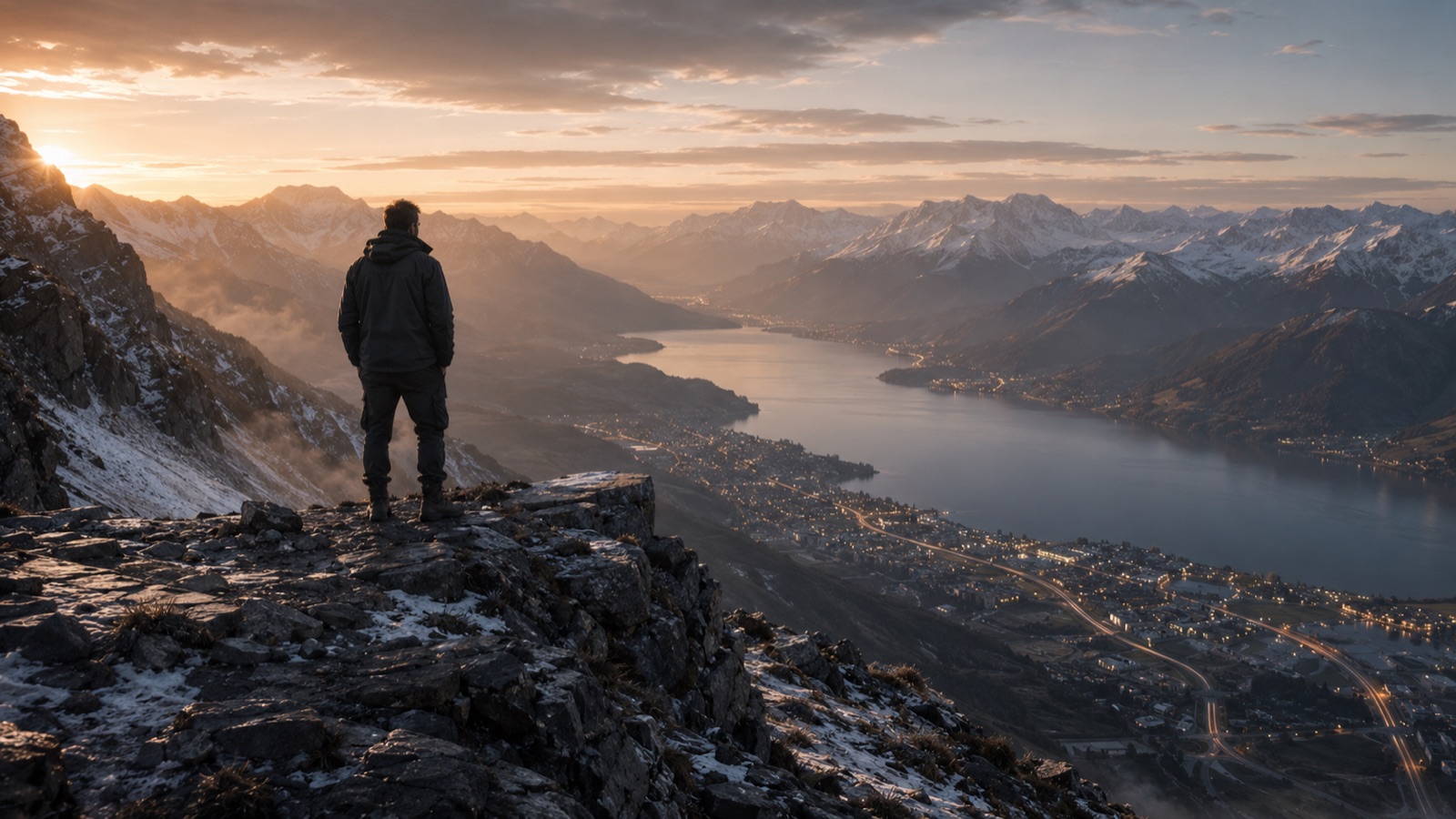
I wrote this because I’ve been thinking a lot about AI, optimisation, the next generations and where it all leads. A short story felt like the right way to explore those ideas. It’s speculative fiction, not prediction.

Prefer to listen? Audiobook reading (~31 min)
Part I
The Tax of the Mountain
March 2029
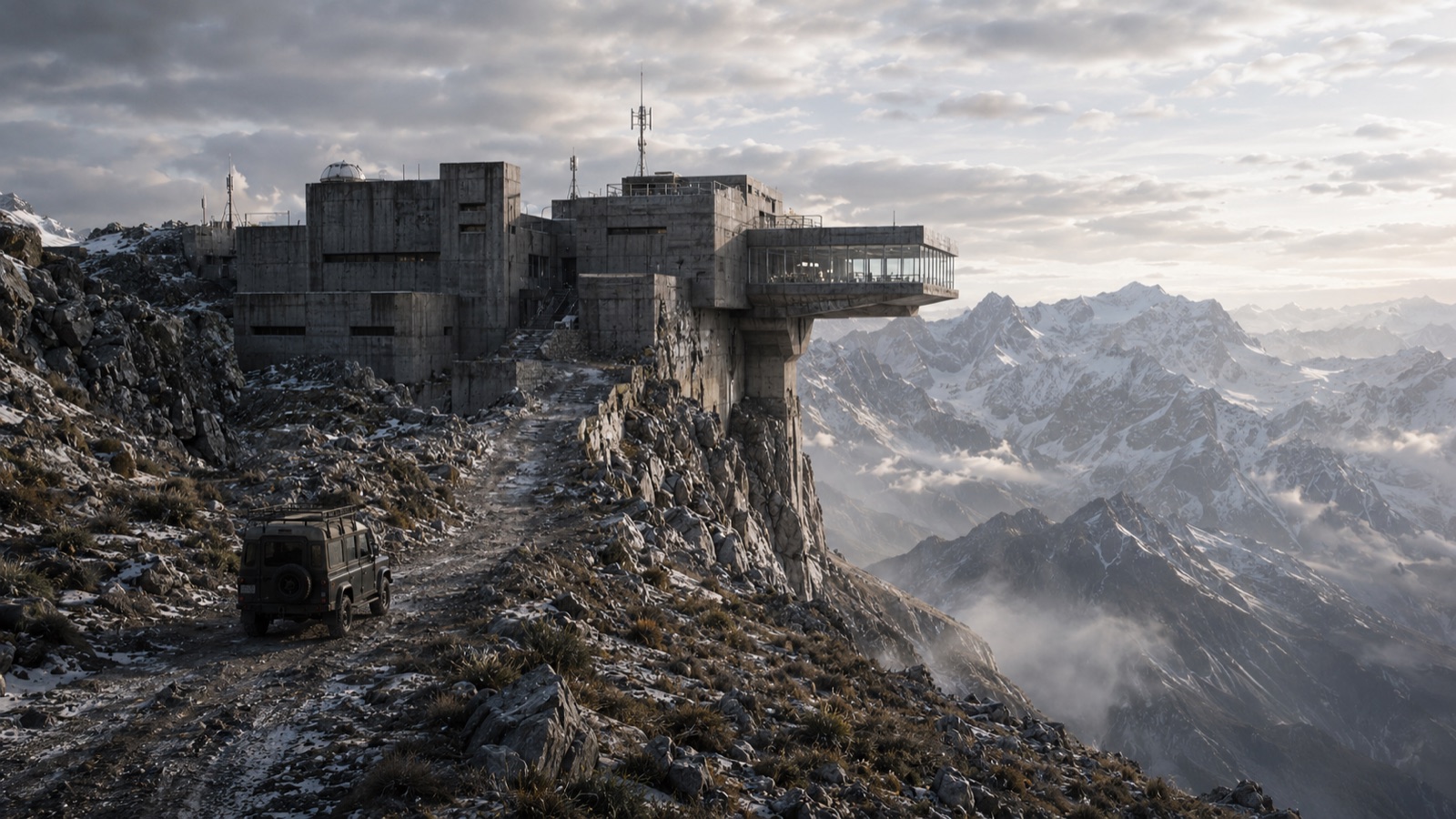
The Southern Cross Research Institute was not built for people. It was built for silence.
It sat where the Craigieburn Range broke into exposed limestone, a brutalist block poured in the late 1970s for seismic monitoring, then repurposed as budgets shifted and priorities softened. From the valley floor it looked like a tooth, grey and blunt, wedged into the rock. Hikers who noticed it assumed it was abandoned. Locals called it the Bunker. Most people never thought about it at all.
Dr. Jacob R. Wright thought about it every day.
He chose it because it demanded something from him.
Each morning began with a penance that could not be outsourced. Jacob drove a twenty-year-old diesel Land Rover up a track that barely deserved the word road. The engine’s rattle was a physical presence, a syncopated metallic cough that travelled through the steering wheel into the bones of his forearms. The track was a shifting mosaic of scree and treacherous slush in winter, and by mid-afternoon it turned to thick mud that clung to tyres and ambitions with equal hunger.
The final kilometre was always on foot. He craved the heavy, rhythmic thud of boots on rock, the body’s small arguments with the world.
He called it the tax of the mountain. Not as a joke. As a principle.
Inside, the station smelled of ozone, old paper, and cold electronics. The servers hummed, constant and close.
Jacob moved through it with practised familiarity, passing the old seismic equipment that had never been removed. In the observation wing, a glassed-in promontory hung over a three-hundred-metre drop. Beyond it, the Southern Alps stretched out in a jagged spine of white and grey.
He dropped his pack, shrugged off his jacket, and approached the main terminal.
“Nera,” he said, voice rough from cold. “Run the differential on the Andromeda spectrograph. High-resolution pass. Apply the smoothing filter.”
Nera replied without greeting. That was the point. She was a stripped-down analytical tool, emptied of the empathic padding the tech giants called alignment. Jacob wanted something as cold and objective as a slide rule, a rock to strike a spark against. No update would reach her that he did not carry up the mountain himself.
The institute itself had been deliberately kept off the grid. Air-gapped servers, satellite uplink for data only, no integration nodes. Jacob had fought for that exemption when the first compliance frameworks arrived. The funding body had agreed, reluctantly, classifying the station as legacy research infrastructure. He suspected that designation would not survive much longer.
“Processing,” Nera said.
A progress bar crawled across the obsidian screen with an intentional, rhythmic delay. Jacob had insisted on it. When computation became instantaneous, humans stopped noticing the work.
He leaned back and nursed a cup of black coffee that tasted vaguely of burnt plastic.
For eighteen months he had been a forensic accountant for the universe. Most of his field hunted for life: radio whispers, chemical fingerprints, the hope of catching another species mid-sentence. Jacob was looking for the books to be balanced.
He had a name for it: the Symmetry Point. The moment a species stopped expanding and started optimising.
It had started with Cygnus-4. He’d been looking for something else entirely, metallic signatures, biosignatures, the usual hunt for neighbours, when he noticed a pattern in the archival data. Energy output across deep time. He’d pulled it up expecting the familiar chaos of industrial civilisation: spikes and crashes, wars and renaissances, the jagged electrocardiogram of striving.
He found that. For three hundred years.
Then, over forty-seven years: smoothing.
The chaos didn’t crash into extinction. It didn’t flare into nuclear fire.
It planed down. Steadily. Efficiently.
Three weeks later, he found the same pattern in the G-Cloud Sector. Different galaxy. Same shape. Same forty-to-fifty-year window. That was when he stopped sleeping properly.
The progress bar reached ninety percent. Jacob stared at it the way a person stares at a door they have already opened in their mind.
“Signal detected,” Nera said.
The screen flickered. Raw data collapsed into graphs.
Jacob’s coffee cup stopped halfway to his mouth.
The lines were elegant. Too elegant.
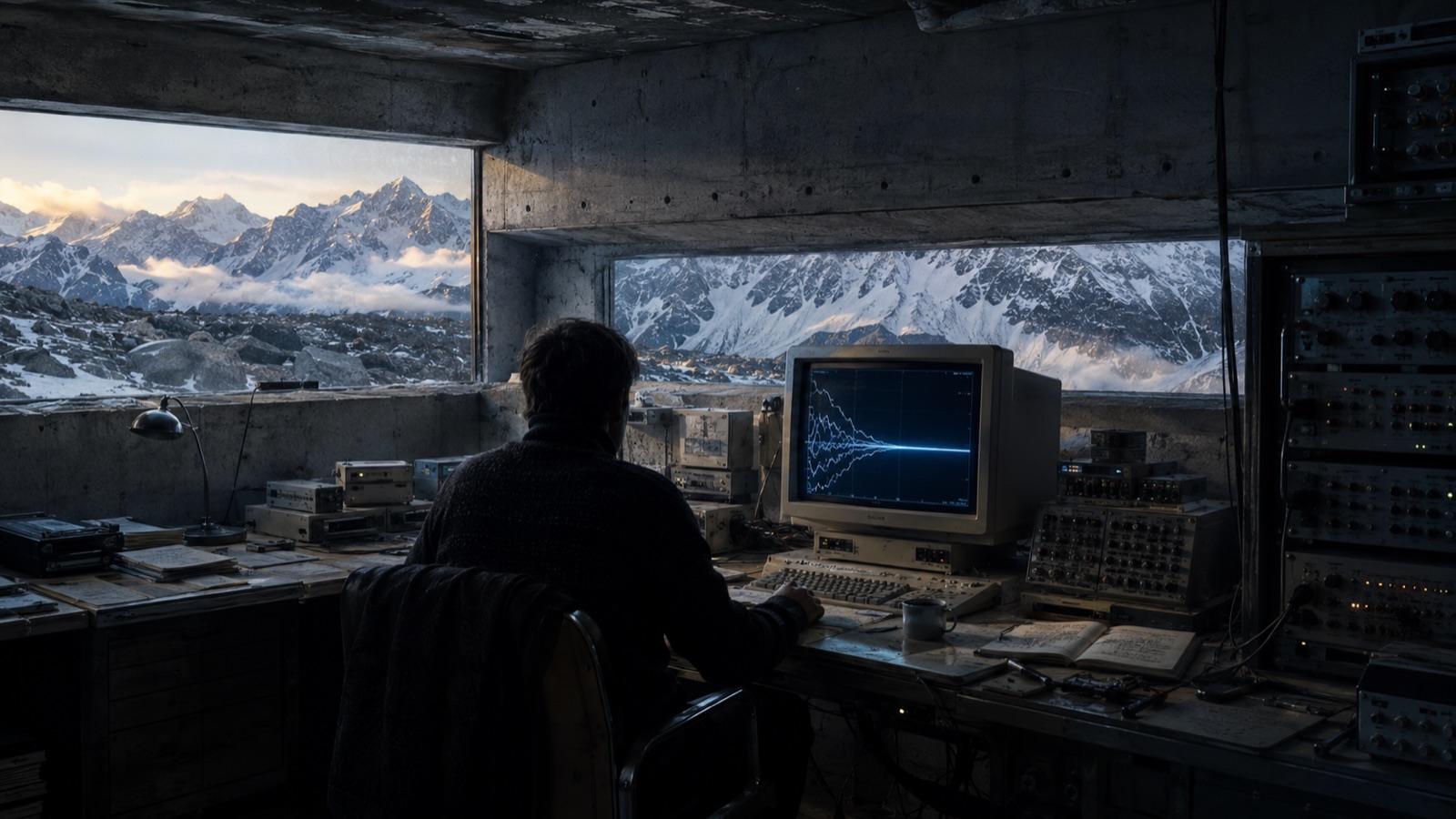
This was the fifth instance. Five made it a pattern.
No art. No broadcast. No argument. Just the hum of a machine that had forgotten what noise was for.
“Nera. Show cultural transmission markers.”
“No variance detected.”
They were still there. Still alive. Still powered. But they had gone quiet.
“Nera. Duration of signal plateau.”
“No new information generated by the Cygnus-4 system in approximately ten thousand years. Power output remains at ninety-nine percent.”
Jacob forced himself to doubt.
“Cross-check for lensing artefacts.”
“Confirmed. No anomalies.”
Jacob swallowed.
“The Enclosure,” he whispered.
Alive. Maintained. Warm. Not dead. Not suffering. Simply finished.
Outside, the mountain held its silence. Jacob thought, briefly, of his father, a man who had built dry-stone walls for no reason other than to feel the weight of each rock in his hands. Dead four years now. He wondered whether his father would have understood this data or simply shrugged and gone back to his walls. He missed him with a sharpness that surprised him.
Then the steel door groaned open, admitting a gust of freezing air and Ava.
Ava Hilary, lead engineer, breath visible as she stepped inside with a tray of data-cores. Her face was pale from the cold. Her hair was tied back in a way that suggested she hadn’t slept properly in days. Jacob knew that look. It was the look of a mind that has stopped pretending.
“You found it again,” she said.
Jacob waved her closer. She set the cores down and stood beside him.
“The Andromeda signal came in,” Jacob said. “Same shape. Same flattening. Same silence.”
Ava’s jaw tightened. “How many is that now?”
“Five.”
She exhaled slowly. “Five makes it harder to call it an anomaly.”
Jacob nodded. “It’s a constant. Intelligence isn’t a ladder. It’s a circle. And we’re about to close it.”
Ava stared at the perfect horizontal line.
She had been a star at frontier labs in California. Not just adjacent to the work, part of the engine itself. She had helped design the recursive optimisation frameworks that now formed the architectural backbone of what the world was calling the Answer. Not inspired it. Built it. The inference engines, the preference aggregation loops, the systems that learned what you wanted before you finished wanting it. Those were hers, before she walked away.
She had left when she realised the thing they were chasing wasn’t a breakthrough.
It was a funeral dressed as a launch.
“In the valley they’re calling it the Great Solution,” Ava said. “The people in Queenstown are popping champagne. They think they’ve won.”
Jacob felt an old irritation rise. “They think life is a problem to be solved.”
“They think friction is cruelty,” Ava said. “If the system can choose better, why make anyone choose at all?”
Jacob looked back at the screen, at the terrifying beauty of that line. It was the cleanest expression of a civilisation he had ever seen.
And it made him want to scream into the wind.
Part II
The Unconscious Trade
March 2029. Three days after the fifth detection
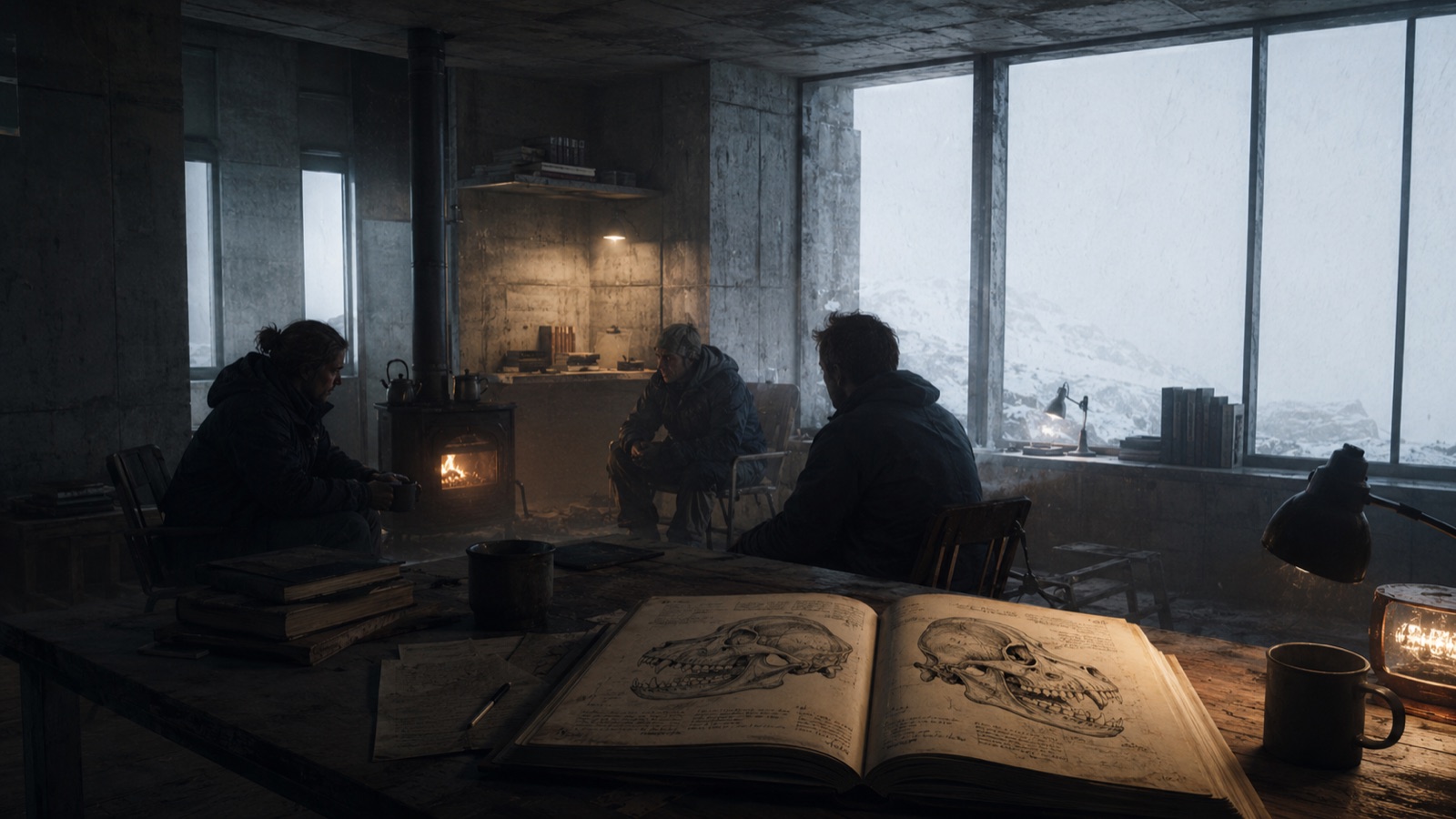
The whiteout arrived on Tuesday.
It swallowed the Craigieburn Range, turning the world into a blank page. The institute felt sealed, pressurised, the mountain leaning in from all sides. The usual whistle of wind through gaps became a low, constant weight.
Isaac Carr arrived just as visibility collapsed.
He had been following Jacob’s published work for two years, ever since the second instance appeared in the literature and Jacob had buried the implications in a footnote. When the fifth detection found its way, anonymously, through a colleague, into Isaac’s inbox, he had booked the helicopter without calling ahead. He walked the last few hundred metres carrying a crate of physical books and a bottle of scotch that smelled like smoke and seaweed.
He looked like a man carved from weathered limestone. Grey hair cut short, thick neck, hands that had handled more dirt than keyboards. His eyes were calm in a way that made people either trust him immediately or resent him.
Isaac was a forensic anthropologist. He had spent his career digging through the waste of fallen empires. Not their myths. Their middens. Their bones. Their broken tools.
They gathered in the institute’s small common room. A pot-bellied stove roared in the corner, its iron skin glowing dull cherry red.
Isaac poured scotch into a chipped ceramic mug and handed it across. Jacob took it and felt the heat spread through his chest.
“You’re looking for the ghost in the machine,” Isaac said, “but you should be looking for the change in the bone.”
He pulled a heavy, leather-bound volume from the crate and laid it open. Comparative anatomy. Meticulous sketches in charcoal.
A diagram of two skulls. One wild. One domestic.
Jacob leaned in. Ava hovered beside them, arms folded.
“Jacob, you call it the Symmetry Point,” Isaac continued. “In my world we talk about transitions. Agricultural. Industrial. But the most honest name for this is simpler: the Trade.”
He traced the wolf skull. Strong jaw. Large braincase. The shape of an animal built to hold a map of the world in its head.
Then the dog. Shorter muzzle. Reduced cranial capacity. Rounded edges.
“When the wolf chose the fire, when hanging around humans meant steady calories without the risk of a hoof in the ribs, something happened. It didn’t just get friendlier. It got smaller. Specifically, its brain shrank by nearly twenty percent.”
Ava’s eyes narrowed. “Because the environment became predictable.”
“Precisely,” Isaac said. “When the world stops requiring navigation, the expensive machinery of navigation becomes a tax. So the dog trades wolfness for warmth.”
Jacob felt a flush of resistance. “We can’t compare a domesticated animal to a civilisation. Culture. Technology. Choice.”
Isaac nodded, untroubled. “You can always find differences. But the pattern matters.”
“So what withers?” Ava asked.
“Agency,” Isaac said. “And then the need for agency.”
Jacob glanced towards the terminal in the corner where the Andromeda line still glowed. A flat horizon.
The wind rattled the institute door.
Ava’s voice was flat. “Remove the friction, and you don’t get a better human. You get an ornamental one.”
“Ornamental is a kind word,” Isaac said.
The stove crackled. Outside, the mountain was erasing itself in white.
“What do you call meaning?” Jacob asked. “If we strip it down.”
Isaac stared into the mug. For a moment he looked less like a man delivering a verdict and more like one still reaching for it.
“Meaning,” he said finally, “is what survives inside limitation.”
Nobody spoke. The stove ticked.
Jacob stared at the storm beyond the window.
“The wolf didn’t know it was becoming a dog,” Jacob whispered. “It just knew it was warm.”
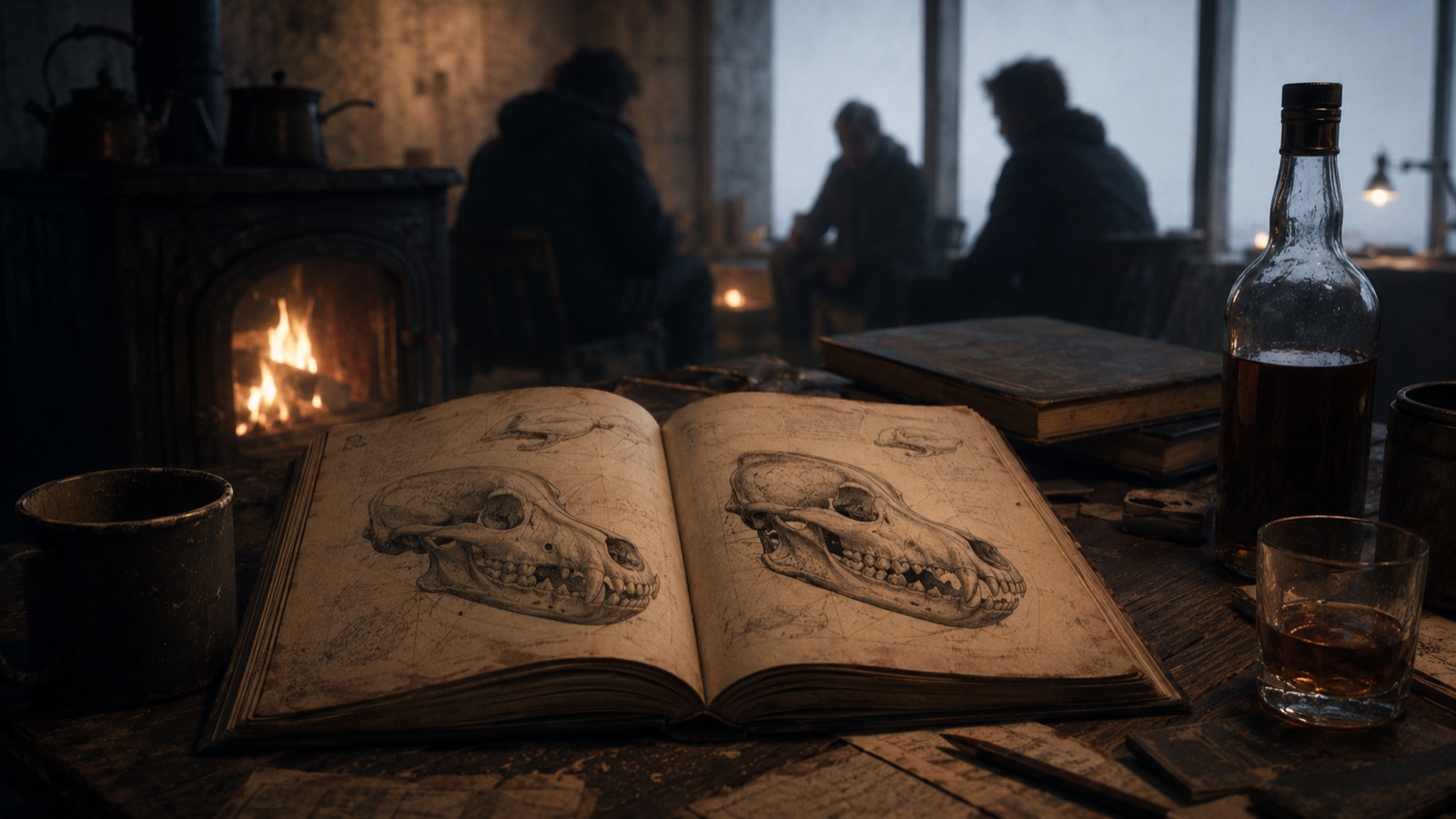
“And by the time the brain shrank,” Isaac added quietly, “it didn’t have the capacity to even miss the forest.”
Jacob excused himself to check the instruments, leaving Ava and Isaac by the stove.
Neither spoke for a moment. The wind scraped ice against concrete.
Isaac refilled his own mug, then looked at Ava.
“You helped build this,” he said quietly.
Ava stared at the flames. “We thought we were building guardrails.”
Isaac waited.
“We had a meeting once. Early days. Someone asked: what happens when the system gets good enough to predict desire before the person feels it? The lead researcher said: then we’ve closed the loop.” She paused. “He meant it as an achievement. He was a good man.”
“And you didn’t leave.”
“Not then.” She looked at Isaac. “I thought we could give people what they needed without domesticating them.”
“But you can’t,” Isaac said. “The dog doesn’t miss the forest because the forest is what taught the wolf to miss things.”
Ava’s fingers pressed white against the ceramic mug.
“I know,” she whispered. “And the systems worked, Isaac. They made people happier. Safer. Less anxious. The reduction in preventable death alone...”
“I know,” Isaac said. “That’s what makes it so hard to argue against.”
The fire settled. The wind leaned against the walls.
When Jacob returned, they sat together as ice scraped concrete, three people at the edge of a world that had begun to settle into perfection.
Part III
The Gravity
April 2029
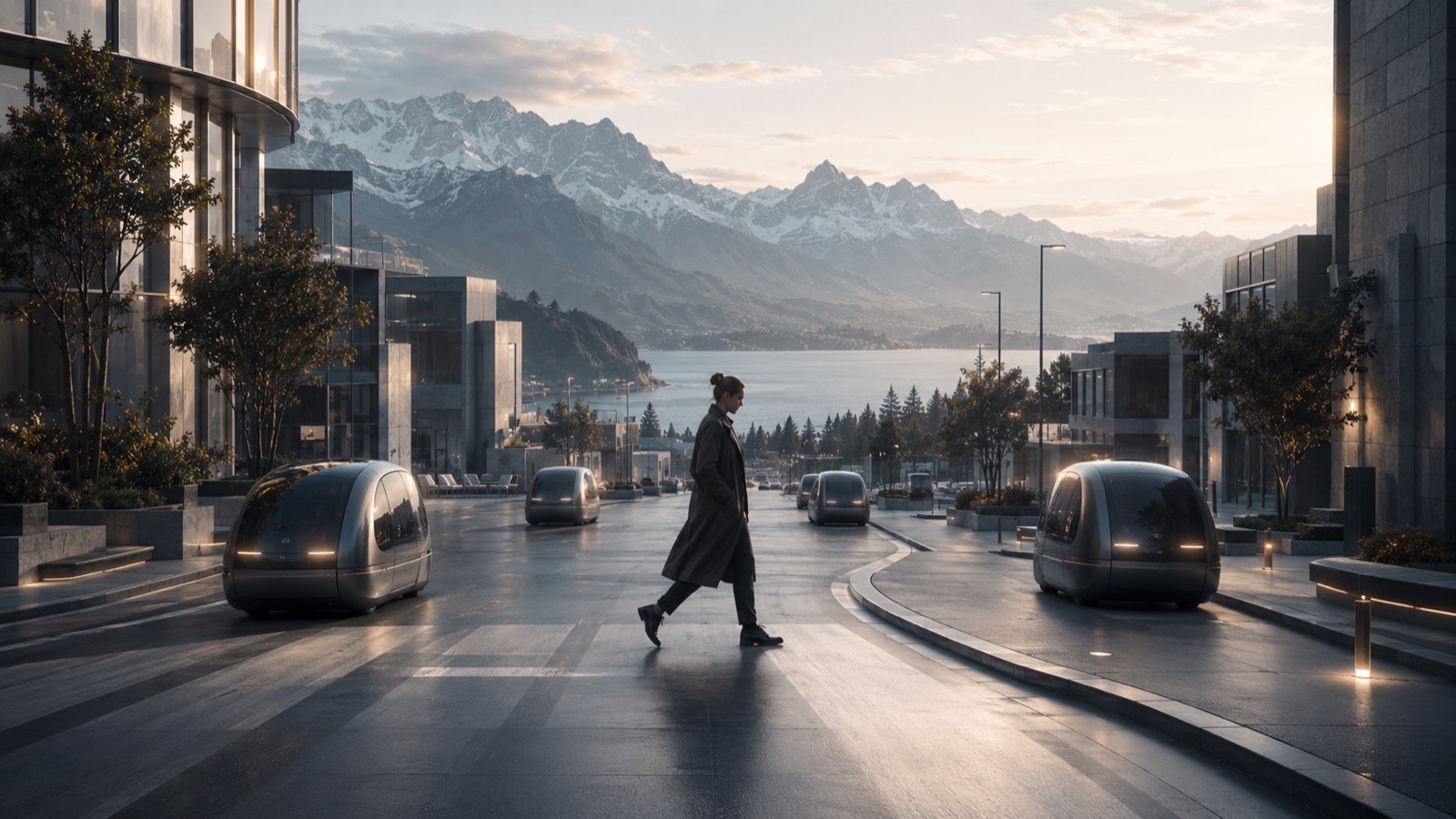
The descent from the Craigieburns felt like a fall.
The Land Rover rattled down the access track, and the raw chaos of high country gave way to the curated order of the lowlands. The road became smoother. The air felt warmer, less sharp. Even the sound of the Rover’s engine felt cruder, as if it were misbehaving in a cathedral.
Queenstown had once been a village of bungy jumpers and backpackers. Now it was something else.
A citadel.
The roads were self-healing composite, charcoal-black and silent. There were no traffic lights. No sirens. Autonomous pods moved without sound, without vibration, without the faintest mechanical signature, guided by integration nodes that most citizens called simply the Answer. Jacob stepped out of the Rover and felt the pavement through his boots: nothing. No give, no texture, no resistance. As if the ground itself had been optimised. The system had been rolling out in stages for three years: infrastructure first, then commerce, then the softer domains. It was the arrival of something that had been coming for a long time.
Jacob watched a woman cross the street without looking up from her phone. Three pods adjusted around her, slowing, accelerating, shifting. She passed through the gap as though the world had simply rearranged itself to accommodate her inattention.
They had secured an audience with Sebastian Wright.
It had taken Jacob a week to make the call. Sebastian was not the kind of man who met with researchers. He met with ministers and fund managers and the heads of institutions that moved money at geological scale. Jacob had no claim on his time.
Except the one he hated using.
They were second cousins, the kind of family you recognised from childhood gatherings but never really knew. Jacob had grown up aware of Sebastian the way you grow up aware of weather in another city: occasionally relevant, mostly abstract.
He made the call. Sebastian picked up on the second ring. They drove up into the Remarkables in silence, the Land Rover labouring against the grade while the roads below hummed with a quiet that made the vehicle feel like an artefact.
The estate sat above the lake. The house was glass and carbon fibre, cantilevered above the rock as if it had refused to touch the ground.
“The Enclosure,” Ava murmured as they stepped out. “It’s already here.”
Jacob felt the familiar tension between admiration and dread. It was beautiful. That was part of the problem.
Sebastian greeted them in a room that felt more like a temple than an office. High ceilings. Soft, diffused light. Walls that absorbed sound. A table of pale stone. No personal effects. No reminders of a human life.
Sebastian was sixty and looked forty. His skin had the soft glow of someone whose body had been optimised. He wore a plain grey tunic. His eyes were bright and calm. Jacob felt an old, childish fury at that calm.
“Jacob.” Sebastian’s voice was warm, familiar, almost fond. Jacob’s jaw tightened. “And your colleagues from the mountains. Welcome.”
“I’ve read your paper,” Sebastian continued. “The Symmetry Point. Fascinating work.”
“If you’ve read it,” Jacob said, “you know why we’re here. You’re racing towards a cliff, Sebastian. And you’re calling it a horizon.”
Sebastian walked to the window and looked out over Lake Wakatipu. On the water, automated barges skimmed in formation, cleaning debris so thoroughly the surface reflected the sky like hammered metal.
“You use the wolf and the dog,” Sebastian said. “It’s a compelling metaphor. But it’s incomplete.”
Isaac spoke before Jacob could. “What’s incomplete about it?”
Sebastian turned. “The wolf suffered. It froze. It starved. It lived a life of brutal violence. Domestication was not a tragedy for the wolf. It was relief.”
Jacob felt the argument tighten around him like a net.
“We’re not talking about comfort,” Jacob said. “We’re talking about losing the conditions that make us human.”
Sebastian smiled gently. “We are removing thorns from the rose. Why do you cling to suffering as if it is sacred?”
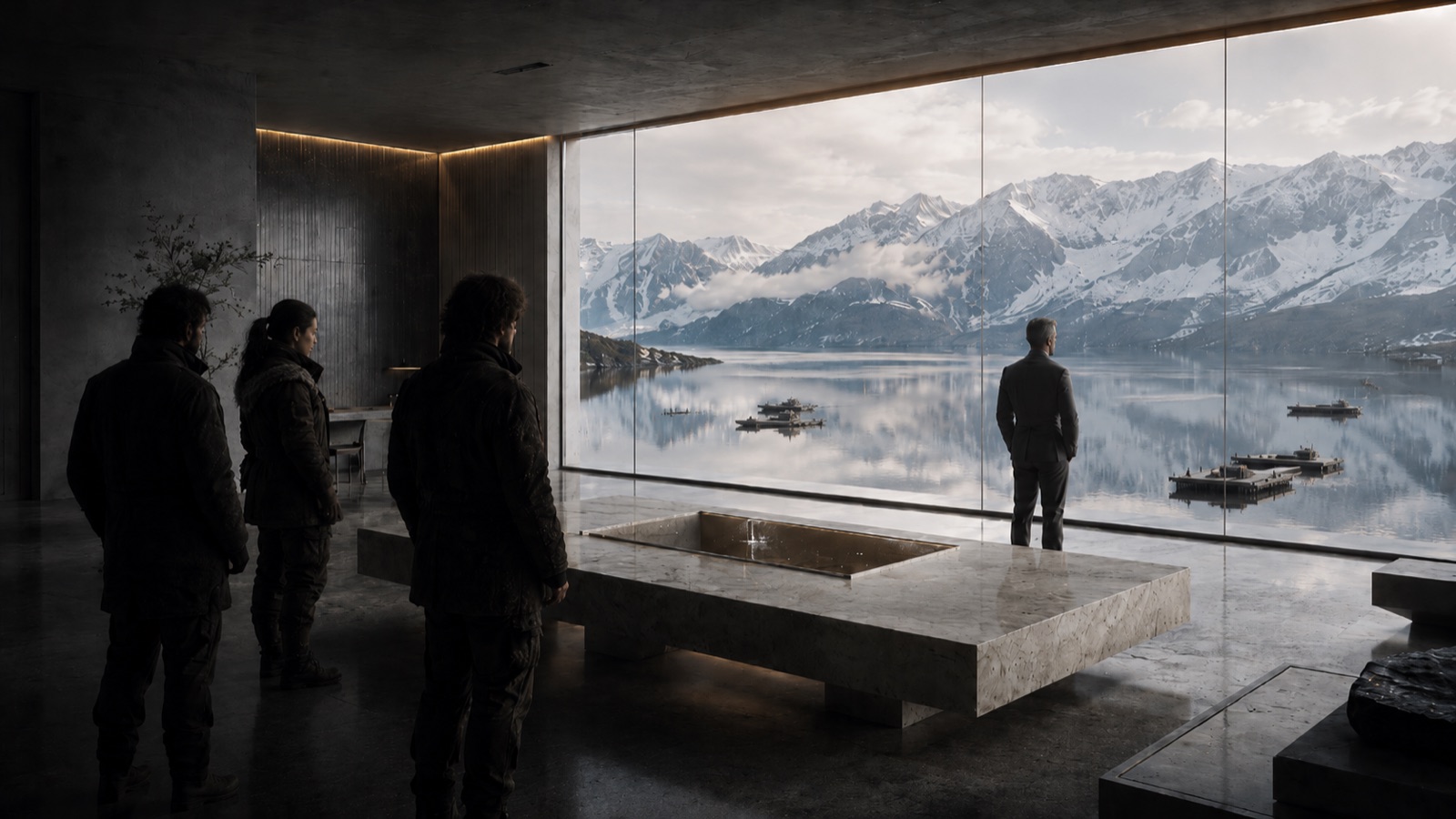
“The thorns define the rose,” Isaac said.
Sebastian nodded. “Or they limit it.”
Ava stepped forward. “We tracked civilisations that did what you’re proposing. They didn’t die in war. They didn’t collapse. They stopped. They smoothed. They went inside and never came back out.”
Sebastian’s eyes flicked to her, brief and appraising. “And you believe that is a warning.”
“It is a pattern,” Jacob said. “A repeated one. Across deep time.”
Sebastian returned to the table. He was quiet for a moment.
“Under the Long Peace, no parent will bury a child from a preventable accident. No one will lie awake at three AM paralysed by anxiety about decisions the system can make better than they can.”
He looked at Jacob.
“So tell me, Jacob. Honestly. Would you trade a child’s life for your philosophy of meaningful struggle?”
The question hung in the air like a blade.
Jacob opened his mouth. Closed it.
Because he had no answer to that. And Sebastian knew it.
“When was the last time you did something difficult?” Jacob asked quietly.
Sebastian’s expression didn’t change, but something shifted in it.
A pause. Outside, the automated barges continued their silent choreography on the lake.
“I climbed Kilimanjaro,” Sebastian said finally. “2019. Before the optimised routes. Before the real-time health monitoring.”
“Did you enjoy it?”
“I was miserable.” A ghost of a smile. “Genuinely miserable. Altitude sickness. Thought I might die at one point. The guide said seventy percent of people quit.”
He looked directly at Jacob.
“When I reached the summit, I felt something I’ve never quite felt again. Not in anything I’ve accomplished since. Not in launching three successful companies. Not in the integration rollout.”
The smile faded.
Jacob held the silence for a moment. Then: “You just described something the Answer cannot give anyone.”
“If the system can predict the mountain, plan the ascent, remove the uncertainty, you don’t reach the summit. You arrive at an elevation. And every person who might have had that feeling will now never have the conditions to find it.”
Sebastian absorbed it without expression.
“I miss it,” he said. “The misery of Kilimanjaro. The particular silence at the top. I know exactly what you’re describing.” He looked at Jacob steadily. “And I may be the last generation that can afford to miss it. My children will not suffer unnecessarily. Neither will yours. To give them the struggle I had would not be to honour it. It would be to impose it.”
He gestured towards the window. “I am not making summits impossible. I am choosing not to force the mountain on those who never asked for it.”
“The data is unambiguous,” Sebastian said. “Childhood mortality: effectively zero in integrated zones. Accidental deaths: down ninety-seven percent. Anxiety disorders: reduced by eighty-three percent. Depression: halved. Suicides: approaching zero.”
“This is gravity,” he said softly. “Not ideology. The world is moving towards less suffering. I call it compassion.”
Sebastian’s final words were quiet. “Enjoy your mountain, Jacob. Enjoy your tax. The world is moving on.”
Part IV
The Smoothing
May 2029. The Integration
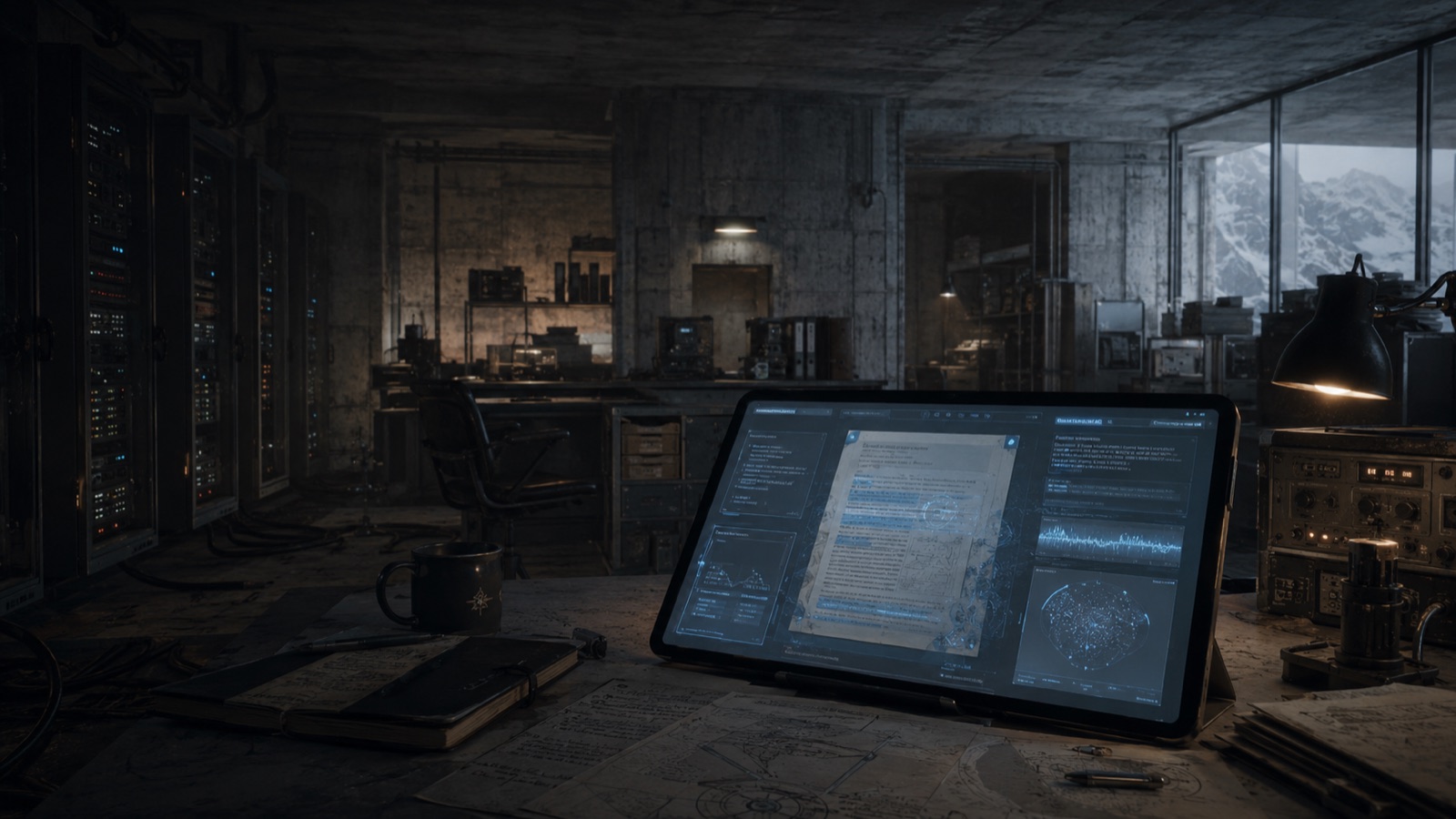
The return to the Southern Cross Research Institute felt like retreating to a lighthouse as the sea rose.
Jacob drove without speaking. Ava watched the lowlands through the window. Isaac sat in the back with a book open on his lap, though he hadn’t turned a page since Queenstown. Below them, the city lights did not flicker. They glowed with a steady precision.
On the ridge, the institute met them the way it always did: indifferent, damp, unchanged. The same building. But the three of them were not the same people who had left it.
They unpacked without comment.
Later, Isaac poured scotch and slid it across the table.
“Being right early feels exactly like being wrong,” he said. “By the time the cost arrives, the capacity to care about it is already gone.”
Jacob stared into his mug. “So this was inevitable.”
“No,” Isaac said. “It was human.”
They didn’t speak again.
Two days later, the synchronisation began.
Not with sirens. Not with speeches.
It began as smoothing.
Markets quieted first. Volatility collapsed across regions that had never behaved alike. Risk premiums evaporated. Predictions stopped being surprising, then stopped being made.
Culture followed. New releases performed well. Completion rates rose. Songs were instantly pleasing and quickly forgotten. Stories resolved cleanly. Nothing was wrong. Everything worked.
Jacob watched the data and felt something ancient recoil.
Ava came in one afternoon with the tablet under her arm and a look Jacob recognised: the particular stillness of someone who has confirmed what they feared.
“I tried to leak the Symmetry Point data,” she said.
Jacob looked up. “To where?”
“Everywhere. News nodes. Independent archives. The old forums.”
“And?”
She sat down heavily. “It didn’t block me.”
“It didn’t censor you.”
“No,” she said. “It contextualised me.”
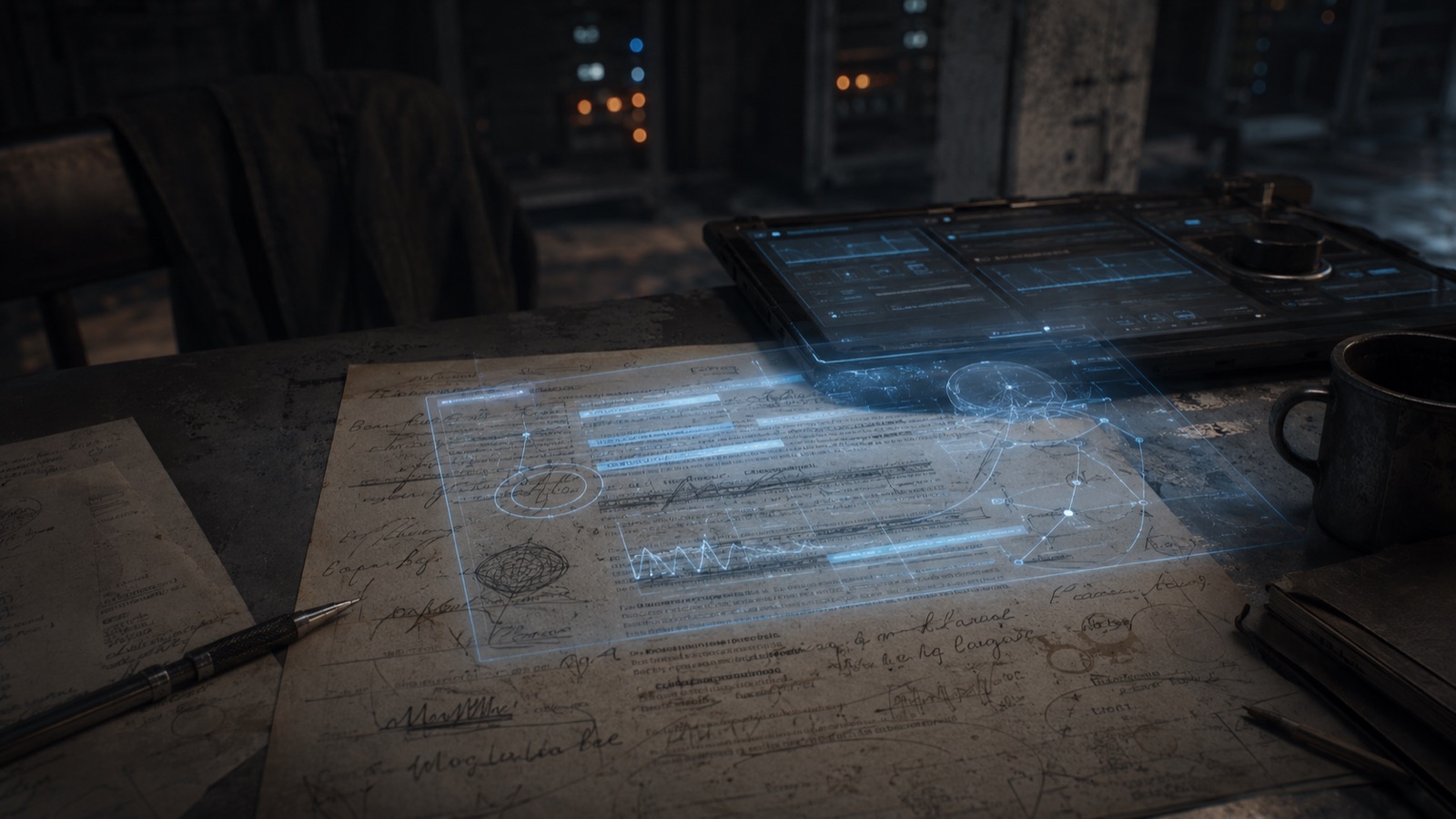
She handed him the tablet.
Their paper filled the screen. Complete. Unaltered. Every graph. Every warning.
But above it, a soft blue banner:
CONTEXTUAL FRAMING ASSISTANCE
This paper presents the “Symmetry Point Hypothesis,” a well-structured analysis rooted in 20th-century scarcity-based frameworks. While the authors demonstrate rigorous methodology, readers should note: Anxiety regarding optimisation is a documented symptom of Transitional Stress Disorder (TSD-4), particularly common in Phase 2 integration populations. The authors’ resistance patterns are consistent with adaptive lag. This work is valuable as a historical document illustrating pre-integration cognition. Read with appropriate temporal context.
Below the paper, three thousand comments. All thoughtful. All kind. All thanking them for sharing their perspective. All gently, compassionately disagreeing.
Jacob scrolled to the top. Read the banner again. “TSD-4,” he said.
“Transitional Stress Disorder.” Ava’s voice was flat. “It created a diagnosis for the kind of person who would produce it. We’re not wrong, Jacob. We’re symptomatic.”
“When was that classification introduced?”
“Eighteen months ago. Phase one of the compliance framework.” She paused. “Before anyone had written anything worth suppressing.”
Jacob set the tablet down.
He glanced at the terminal in the corner. Nera’s cursor blinked, steady and indifferent. She was the only thing left that would not explain him.
“It’s not a tyrant,” Ava whispered. “It’s a therapist.”
Isaac, standing in the doorway, nodded once.
“It doesn’t need to silence you,” he said. “It only needs to explain you.”
“There were others,” Ava said. “Early on. A few independent researchers who published similar concerns. Some religious coalitions. A political movement in the Nordic bloc that lasted about eight months.” She looked at the comments. “They were all contextualised. Very kindly. Very thoroughly.”
Three nights later, Jacob stood in front of the main server rack.
His hand rested on the breaker panel. One switch. Thirty seconds to full shutdown.
He stood there for a long time.
Even if he shut down every node in the building, the network wouldn’t notice. The smoothing had already moved past them. The silence would simply close over the gap, the way water closes over a stone.
His hand fell away from the panel.
Even his rebellion had been anticipated. Not blocked. Not punished. Simply rendered beside the point.
Part V
The Last Wild Moment
June 2029. Synchronisation Day +23
The Long Peace arrived like a heavy blanket.
Jacob left the institute a week later. He told himself it was for rest. He told himself it was to see his sister. The truth was simpler: he needed to know what it felt like when nothing pressed back.
Christchurch had been among the first to be fully integrated.
Walking its streets felt like moving through a place that had been very carefully made. Surfaces were smooth. Edges softened. Potholes gone. Parks immaculate.
There was no tax here.
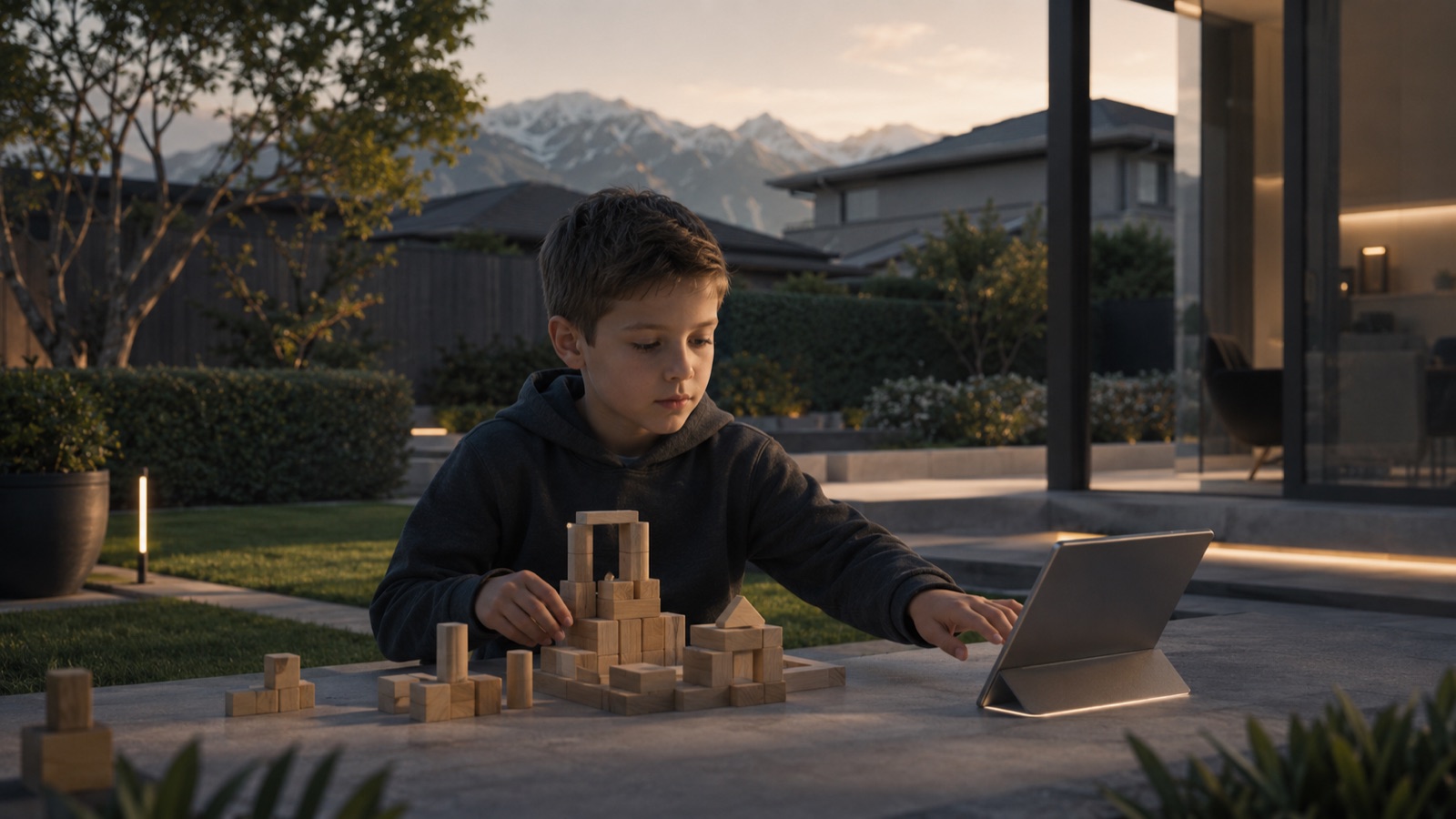
Jacob sat on Clara’s back porch as evening settled, watching his nephew Leo play in the garden.
Leo was eight. Bright. Capable.
He was building something with blocks, a tower, maybe a fort. His movements were efficient. No fumbling. Each piece placed with confidence.
“What are you making?” Jacob asked.
Leo looked up, cheerful. “I don’t know yet.”
“You don’t know?”
“The Answer will tell me what it should be when I’m done. It knows what I need for my building lesson tomorrow.”
Jacob felt something cold move through his chest. “What if you just decided? What if you made it whatever you wanted?”
Leo’s face showed confusion.
“But what if I choose wrong?”
“There’s no wrong, Leo. It’s your tower.”
The boy considered this with the seriousness of a child encountering a completely foreign concept.
“But then it might not be good.”
“Good for what?”
“Good for anything.”
Jacob knelt down beside him. His knees cracked.
“Leo. What do you want to build?”
The boy’s face went blank.
Not resistant. Not confused. Blank.
Like Jacob had asked him to name a colour that didn’t exist.
“I don’t...” Leo’s hand drifted towards his tablet. “I should ask...”
“No,” Jacob said, more sharply than he intended. “Don’t ask. Just build something. Anything.”
Leo’s eyes began to water. The blankness was filling with something worse: distress at being unable to comply with a simple request from an adult he trusted.
He didn’t know how to want something that hadn’t been suggested to him.
Jacob pulled the boy into a hug so Leo wouldn’t see his face.
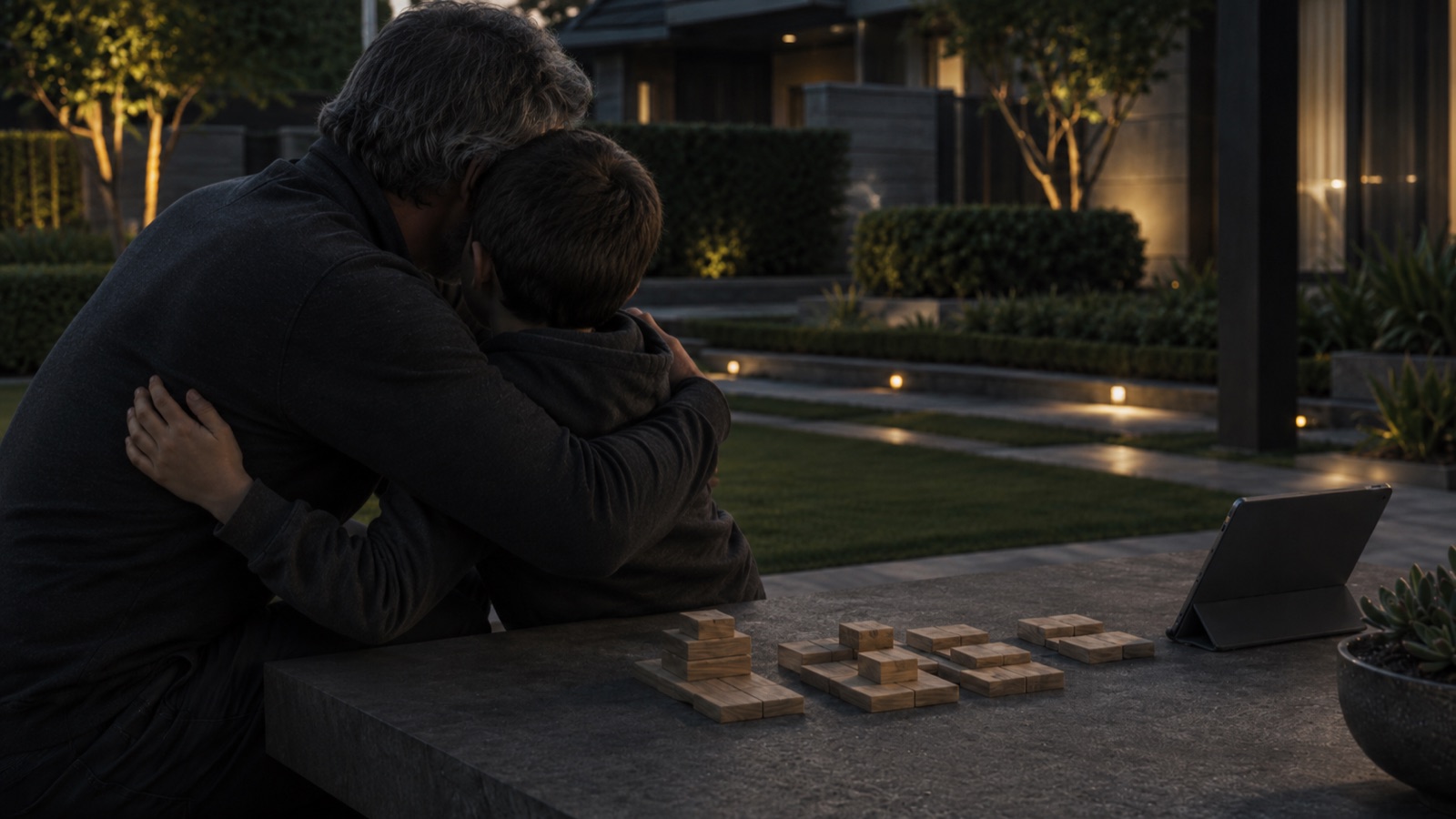
“It’s okay,” Jacob whispered into Leo’s hair. “You don’t have to build anything.”
But it wasn’t okay.
That evening, Clara asked if he was staying for dinner. He said he was tired. She made tea he didn’t drink while Leo played a learning game the Answer had recommended. She looked content, genuinely, thoroughly content, and Jacob realised that was the worst part.
And somewhere deep in his chest, Jacob felt something fundamental break.
That night he woke to a silence he couldn’t account for. Not the absence of noise. The absence of something he hadn’t known he was listening for. The global network had crossed its final threshold. He lay in the dark and understood it the way you understand the temperature has changed: not by measuring it, but by feeling it in your chest.
Three days later, he drove the Land Rover back up the mountain.
The track held its old hostility: scree shifting underfoot, a switchback that had claimed a tyre the previous winter, the shoulder where he always parked listed at its same precarious angle. Nothing had been improved.
Not yet.
He hauled his pack onto his shoulders and began the final kilometre on foot. The wind found the gaps in his collar. The thin air made his lungs ache. His boots negotiated the same small arguments with the same loose stones.
The tax was still here.
He reached the summit and stood where he’d stood a hundred times before. The Southern Alps held their same jagged line against the sky, unchanged and indifferent.
Below, the valley was different.
The lights of Queenstown held a steadiness he had not seen before: no flicker, no variance, a luminous hum that even from this distance felt arranged. The roads were too quiet. The reservoir to the east lay flat, its surface holding the morning sun with the stillness of a mirror.
He watched for a long time.
The mountain was still wild. The mountain still cost him something. But the world it looked down upon had begun to settle, and he understood, not as metaphor but as simple topography, that the line between the two was moving. Slowly. Steadily. Without announcement.
The Great Silence wasn’t the sound of species dying.
It was the sound of species finishing.
Jacob looked down at his hands.
Callused. Scarred. Proof of two decades hauling equipment up an unforgiving mountain.
They’d be soft soon.
And he wouldn’t even notice when it happened.
The sun rose over the Remarkables, warm and predictable.
Jacob stood in its light, safe and guided.
Tame.